Party Games: Treasure Hunt
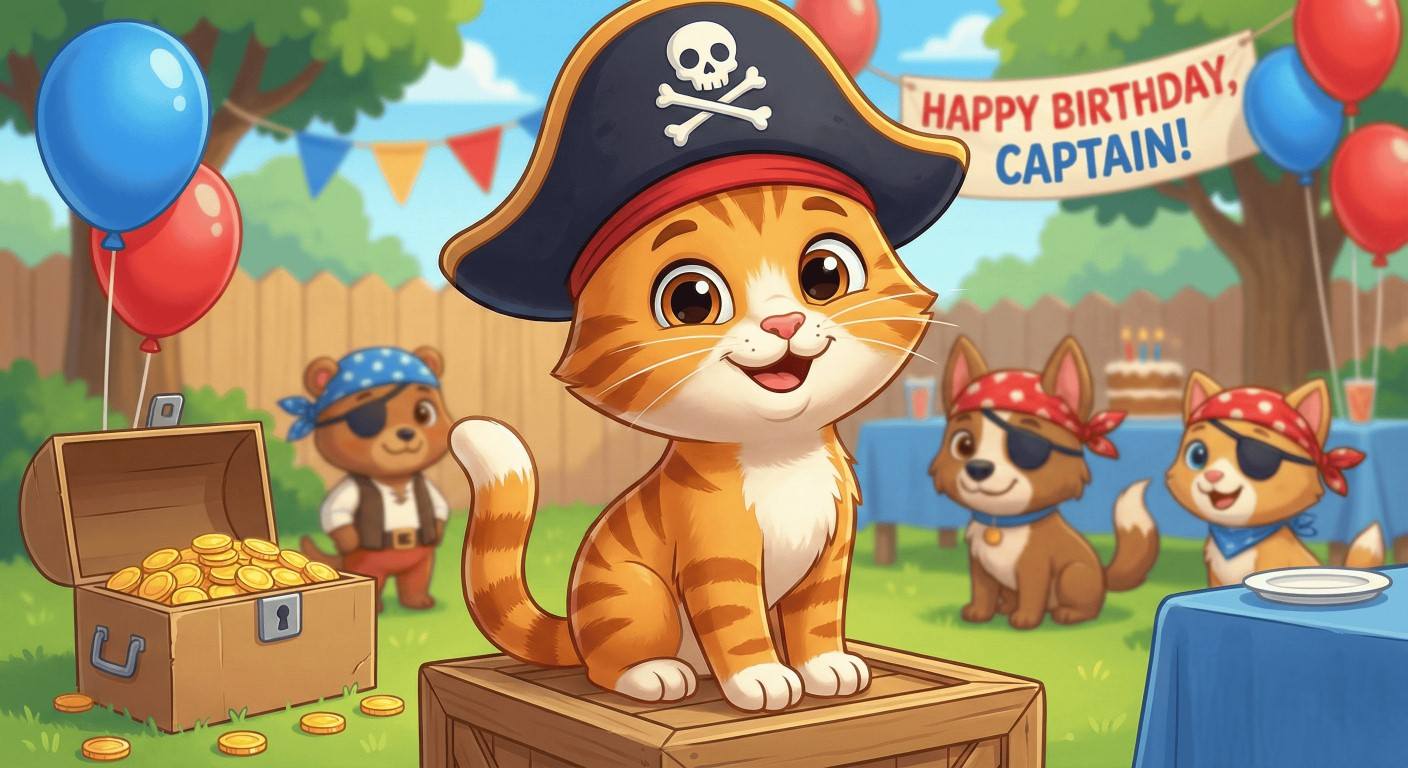
“Avast me hearties! It’s time for a treasure hunt!“
Who doesn’t like hunting for treasure? Whether your guests are young or young at heart, going on a treasure hunt can be the highlight of any event. But, where do you start? Below, we’ll be talking about two different ways you can run your own successful treasure hunt!
Note: You don’t have to have a pirate-themed party to take advantage of a treasure hunt, just change the narrative of your hunt to match your theme.
Treasure Hunt #1: Directed Hunt
This type of treasure hunt revolves around sending your guests from location to location in search of the next clue. This type of hunt may work better as a group hunt, where everyone is working together to find the treasure, than an individual or small group hunt where everyone is trying to find the treasure first. This can be offset if your clues are difficult to decipher.
Setup:
Determine the story:
- You’ll need to determine if you want your hunt to have a backstory. This is optional, but it can vastly improve the fun of your treasure hunt by immersing your guests in a common goal.
- The story is your own to create and can match whatever theme your party has (if you have a theme).
- Some ideas that may spur your creativity:
- Princess Party: An evil wizard has placed a spell on the princess. Your group must find the enchanted tiara it before sundown, or else the princess will fall under the wizard’s spell and be turned into a frog.
- Hero Party: Doctor Evil plans to use his transformation ray on the city to turn everyone into hamsters. Your guests, as the city’s heroes, must find the transformation ray before this happens.
Determine treasure type:
- Prizes:
- At the end of the hunt, you may want to have a prize for the winner(s). This can be virtually anything.
- Some ideas may include party favor baskets, candy, cupcakes, etc.
- This type of prize is good for individual or team hunts, but can also include group hunts.
- This type of prize is good for individual or team hunts, but can also include group hunts.
- Party Festivities:
- The clues of the hunt will lead the party toward something that will progress the party to the next event/festivity.
- Some ideas may include unveiling the birthday cake to eat, introducing a costume character or magician, linking to the next game, etc.
- This is a good type of prize for a group hunt, rather than individuals or teams.
- This is a good type of prize for a group hunt, rather than individuals or teams.
- Experience:
- This type of treasure is largely for storytelling hunts. Your group(s) have found the long-lost treasure and have successfully solved the adventure. The successful completion of the story is the treasure.
- A bonus idea: Give the successful guests a small memento prize, like a toy medallion necklace.
- This type of treasure is largely for storytelling hunts. Your group(s) have found the long-lost treasure and have successfully solved the adventure. The successful completion of the story is the treasure.
Note: You can mix and match prizes. Don’t feel limited to a single choice.
Determine clue type:
- Linear Clues:
- For this type of clue, your guests will be given a clue that will lead them to the next clue. This will continue until they are led to the end of the hunt.
- Photo Clues:
- This type of hunt involves guests using photos to determine where the next clues are located. Some ways this can be done are:
- General locations: Take a photo of the rooms/locations where the next clues will be located.
- This is a good clue type for younger groups.
- Unless you want the group to rummage through everything in the location, you may want to hide the clues in plain sight.
- Deciphering locations: Take an up-close photo of specific items where the next clues will be (i.e., under a red box, or inside a cabinet). This adds an element of puzzle-solving and exploration to the game.
- This type of clue is good for older groups, and if you want the hunt to last longer.
- Optional: If you take an extreme up-close photo of the item, your guests will have the added difficulty of figuring out what the item is, in addition to where it is located.
- If you go this route, but don’t want it to be too hard, you could give a hint to the location of the item.
- If you go this route, but don’t want it to be too hard, you could give a hint to the location of the item.
- Written Clues:
- This type of clue involves a written word or phrase that will lead your guests to their next clue.
- This clue can be as simple as a single word hinting at the next location, like “Garage”, or as complex as a riddle that the guests have to solve to find the next area.
- This is a great opportunity to get creative and add flavor to your hunt, especially if you have a story. You can write elements or riddles that are themed to your story that will progress the story.
- Note: This type of clue is best for older guests, as younger guests may have trouble reading or deciphering the clues.
- This clue can be as simple as a single word hinting at the next location, like “Garage”, or as complex as a riddle that the guests have to solve to find the next area.
- This type of clue involves a written word or phrase that will lead your guests to their next clue.
- For this type of clue, your guests will be given a clue that will lead them to the next clue. This will continue until they are led to the end of the hunt.
- Gathering Clues:
- This type of hunt involves your guests locating multiple clues and putting them together to solve the hunt.
- This is more of a freeform hunt where guests will be scouring everywhere to locate puzzle pieces. This has a similar feel to an Easter egg hunt.
- An idea you can use is taking a low-count jigsaw puzzle and gluing a printout of a treasure map over the top. The treasure map shows the location of the final treasure. Cut up the map along the lines of the puzzle and hide the separated pieces for your guests to find and assemble.
- Note: If you want a higher quality option, there are websites where you can order custom jigsaw puzzles.
- This type of hunt is great for all ages.
- This type of hunt is generally best for group hunts.
- If you want your hunt to be individual or team-based, you can hide multiple copies of each clue piece so that there are enough clue pieces for everyone to assemble the map.
- This type of hunt involves your guests locating multiple clues and putting them together to solve the hunt.
Note: There are more clue types you could use. Feel free to be creative.
Hide the clues:
- Now that everything has been prepared, it is time to place the clues in their predetermined locations.
- Be sure to double-check your clues; it is easy to get them mixed up and place the wrong clue in the wrong location. You don’t want your guests to find the final clue at the start of the hunt.
- If you’re running a gathering clue hunt, be sure to hide your clues with appropriate visibility. Younger guests need the clues to be more visible than older guests.
- Also, depending on how much you want guests to be digging through things, you may want to avoid making them too difficult to time.
Running the Hunt:
Tell the story (Optional):
- If you have prepared a story for your hunt, now is the type to gather your guests and read it out to them.
- Optional: Enhance your story by having someone dressed up and in-character telling the story. (i.e., a Super Hero visits the party and tells everyone about the Doctor Evil’s plan, and they need everyone’s help to stop the villain and save the city.)
Distribute the starting clues:
- This is the time to give your guests the first clue that will lead them on the hunt.
- Note: This is usually only if you are using linear clues. For gathering clue hunts, feel free to give a hint to start everyone off.
- For the first clue, you have the added option of giving a verbal clue instead of a physical clue. This can work well if you are using the option of telling a story to your guests.
- Feel free to use your creativity on alternative ways to distribute your starting clues.
Monitor the guests:
- While it may seem like a treasure hunt is self-sustaining, having someone monitoring and guiding your guests may prove beneficial for everyone.
- Your guests may require a little guidance if they get stuck. Feel free to give them a little nudge in the right direction if they are stuck on a particular clue for too long.
- If there are areas you don’t want your guests to explore, you may need someone to deter them from entering those areas.
- Optional: You may also want to use some paper ribbon to note an area is off-limits.
- As thorough as we can plan our hunts, errors can occur that a monitor may be needed to help with (i.e., a clue got placed in the wrong location).
The treasure has been found!:
- Yay! Your guests have followed the clues and have found the treasure!
- If you are running a story, this is the time to read to them the ending of the hunt.
- If you started your story in-character, you can close the story the same way.
- Optional: Add another character to the story (i.e., Doctor Evil has made their appearance, and the superhero and guests defeat the villain).
- If you started your story in-character, you can close the story the same way.
- If you are running a story, this is the time to read to them the ending of the hunt.
- Now is the time to present your guests with the treasure.
- This can vary depending on the treasure type(s) you pre-determined.
Congratulations! Your guests have found the treasure, and everyone had a great time. We hope you have found this guide helpful. Please give us any feedback so that we can continue to revise this guide and make future guides better.